Bape Graphic Print Black Tee Review: The Graphic You Get Isn't the One Photographed
We ordered the $19.70 Bape-listed graphic tee, filmed the unboxing, measured a size L at 214 g with calipers and wore it for 14 days. The colour code you pick decides the graphic you get.
- Published
- Editors
- Priya Raghunathan · Reviews Editor
- Editor score
- 4.0 / 5
- Hands-on score
- 4.0 / 5
Editor verdict
A neat, roomy mid-weight cotton tee for $19.70, but the front graphic is randomised by colour code and the heat-transfer print began crazing by day 14. Buy the code, not the photo.
| What works |
|
|---|---|
| Watch-outs |
|
When this may suit you
Cross-border buyers who want an inexpensive, roomy cotton graphic tee, will order a specific colour code, and will request a QC photo of the actual print before dispatch.
When to look elsewhere
Buyers who need a verified branded item with tags intact, a close fit out of the bag, or a print that survives normal washing without special care.
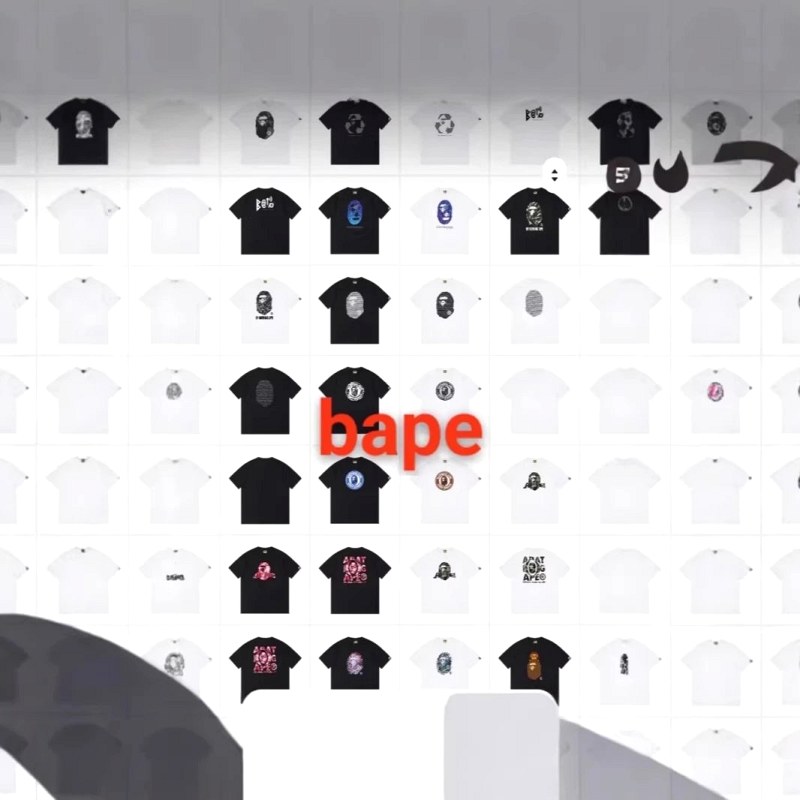
The listing photo for this tee is a clean, almost architectural shot of a black crew neck with a graphic across the chest. That photo is not a product specification. It is one output from a single source file, reproduced across more than seventy colour codes, and our order confirmed it: the shirt that arrived carried a different front graphic from the one in the lead image. That single fact should shape how you buy this thing.
What we ordered and what it cost
We paid USD 19.70 for SKU 7705005398 through a Weidian shopping agent, against a crossed-out 22.46. The listing is marked in stock and offers S through XXL; we took a size L in the black variant and let the agent ship it on our standard consolidation lane. The shirt arrived folded in a plain poly bag with no hangtag, no branded tissue and no size sticker on the bag. Our first note on the sheet, written before the bag was opened, was that the packaging gave us nothing to verify against.
The seller's own specification sheet is worth reading closely, because it disagrees with the storefront. It lists the brand as an own label, the print method as heat transfer, the pattern as random, the weight range as 250–300 g and the fabric as pure cotton with a moisture-wicking function. Only the last of those is a claim we could partly test.
Bench numbers
Everything below was measured on our size L, flat, before the first wash.
| Check | Result (size L) |
|---|---|
| Garment weight, bench scale | 214 g |
| Chest, pit to pit, flat | 56 cm |
| Body length, high point to hem | 71 cm |
| Shoulder, seam to seam | 48 cm |
| Sleeve, shoulder seam to cuff | 21 cm |
| Hem width, flat | 56 cm |
| Stitch density, hem and shoulder | 11–12 per inch |
| Neck ribbing depth | 2.0 cm |
Two things stand out. First, 214 g sits below what a 250–300 g claim would suggest for a size L, and it reads as a mid-weight knit rather than a dense one. Second, the measurements confirm what buyers have been reporting for a while: the cut is generous. A 56 cm flat chest on a labelled L is closer to what many brands sell as an XL, and it explains the consistent advice to size down. The listing itself publishes no garment measurements, so these numbers are the only ones you will get before ordering.
Under the loupe the seams are tidy — double-needle hems, no skipped stitches, no loose thread tails inside the body. The neck ribbing is the weaker point: it is a plain set-in band rather than a taped or reinforced collar, so it is the area we watched hardest over two weeks.
The colour-code problem
This is a listing with 70-plus variants coded from B00 to B42, split into white and black bases with descriptors like black-green, white-brown, black-gold and black-navy. The specification sheet states the pattern is random. That is not a description you can design an outfit around, and it means the lead photograph functions as a mood board rather than a preview.
Our practical advice for ordering through an agent is blunt: treat the colour code as the only real instruction, and ask for a pre-shipment QC photo of the actual front graphic before the parcel leaves the warehouse. That one request closes most of the gap between what you think you bought and what lands in Rotterdam. Photograph the print on arrival too — if the motif differs from the code's reference image, you want that image timestamped.
Fourteen days of wear
Day 1: worn straight from the bag for a full day. The fabric had a faint chemical smell on opening that cleared after 24 hours of airing. The fit was loose through the body with a straight drop from chest to hem, no shoulder pull, and the graphic sat high enough to stay visible under an open jacket.
Day 7: after one cold wash inside out and a line dry, the shirt had taken up slightly in length and the neck band had relaxed by a couple of millimetres. No colour transfer to a white undershirt and no measurable shrinkage in the chest. Under the loupe, the print edges were still sharp.
Day 14: after a second cold wash, the loupe showed fine crazing along the lower edge of the heat-transfer film, the familiar early stage of cracking on this type of print. Nothing visible at arm's length, but it is there, and it matches buyer reports that this construction fails gradually rather than all at once. The collar had not stretched out of shape, and the cotton had softened into something more comfortable than it felt on day one.
Our care routine was the one buyers recommend: turned inside out, gentle cold cycle, mild detergent, no dryer, line dry in shade. Heat is the main enemy here, and the dryer is where most of these shirts die.
On the branding
The storefront presents this as a Bape product, but the seller's own specification sheet names an own label, so we are not treating the branding as verified. Published authentication guides for the brand point to the ape logo's mouth shape, the placement and boxiness of the registered mark on the tag, and the print quality of the wash label — none of which we could check, because our shirt arrived with no tag at all. If brand accuracy matters to you, that is a real gap and you should say so to your agent before paying.
Where that leaves the $19.70
As a cheap, roomy, mid-weight cotton tee with a graphic on the front, it works. It is comfortable, it layers well, and the construction is neater than the price suggests. As a specific branded graphic tee, it is a lottery with a documented failure mode. Buy the code, request the QC photo, wash it cold, and the arithmetic is fine. Buy the photograph, and you will be negotiating with a warehouse in another time zone.
Frequently asked
Will I get the graphic shown in the product photos?
Probably not exactly. The seller's specification sheet lists the pattern as random and the listing runs more than 70 colour codes, so the lead image is illustrative. Ask your agent for a pre-shipment QC photo of the actual front print.
Can I verify the Bape branding on arrival?
Our size L arrived with no hangtag, so the usual checks — ape logo mouth shape, registered-mark placement, wash-label print quality — had nothing to examine. The seller's own spec sheet lists the brand as an own label, so treat the branding as unverified.
Is it worth paying for QC photos?
Yes. With a randomised graphic and a print that crazes early, one timestamped photo of the front of the shirt before dispatch is the cheapest protection in the whole order — and it settles any later dispute about which motif you were sold.
Community feedback (0)