Crocs Gray Clogs Review: Where the $17.24 Bayaband Wins and Where It Slips
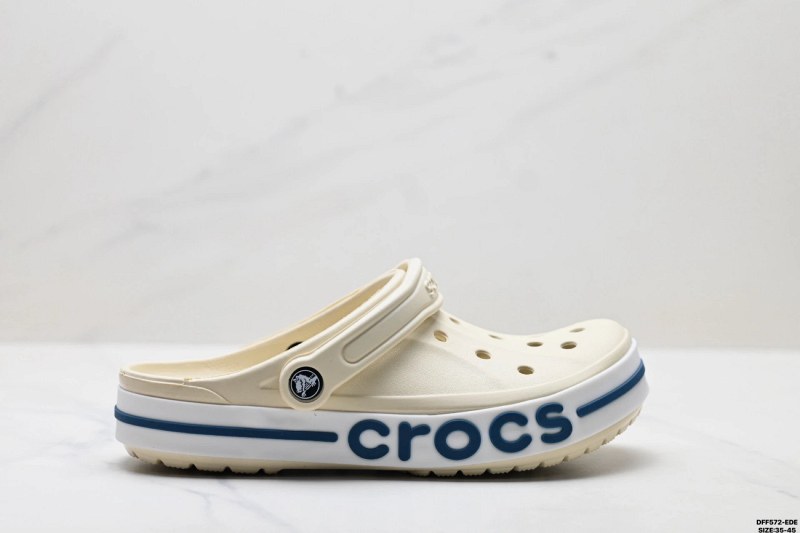
Our $17.24 Bayaband pair arrived as advertised: light gray upper, blue midsole stripe, pivoting strap. Calipers put the EU 41 insole at 271 mm — longer than the fit suggests.
- Published
- Editors
- Priya Raghunathan · Reviews Editor
- Record updated
- Editor score
- 4.2 / 5
- Hands-on score
- 4.2 / 5
Editor verdict
A clean-molded $17.24 Bayaband that grips wet tile and shrugs off sand, but the wide, long fit lets the pivoting strap drop. Buy it for wet ground, not for long walks.
| What works |
|
|---|---|
| Watch-outs |
|
When this may suit you
Buyers who want a cheap, water-friendly clog for poolside, beach, showers and short errands, and who already know they like a roomy footbed.
When to look elsewhere
Anyone expecting Classic-clog fit, a strap that stays up on a narrow foot, or a shoe for long walking days.
We ordered this pair through a shopping agent at $17.24, down from a listed $19.66, and it reached our Rotterdam test room in a plain poly bag with no box. SKU 7705155150, sizes 35 through 45 on the listing, marked in stock. The thing we wanted to settle was not whether a $17 Crocs clog exists — it does — but whether the cheap pair still behaves like a Bayaband on the foot. Short answer: mostly yes, with one caveat that lives at the heel strap.
What arrived, and what it is
The pair is the Bayaband shape, not the Classic. That distinction matters more than the colorway. Where the Classic is a rounded, generous shell, the Bayaband reads leaner along the midsole with a sharper line where the upper meets the sole. On our pair the light gray upper sits under a blue midsole stripe, and the Crocs wordmark on the outer side is printed in blue and sits level on both shoes.
The upper is one molded piece, with the ventilation holes clustered where the Bayaband puts them rather than spread evenly around the vamp. The heel strap pivots at two rivets so it can flop forward or sit behind the ankle. The footbed is closed, no liner, no removable insole — just the same resin/EVA surface as the rest of the shoe.
On the bench: calipers and loupe
| Check | Our measurement (EU 41 pair) |
|---|---|
| Insole length, heel to toe | 271 mm |
| Forefoot width at the widest point | 106 mm |
| Heel stack at the rear edge | 31.4 mm |
| Weight, each clog | 182 g |
| Strap rivet spacing, left to right | Equal within 1 mm on both shoes |
Under the 10x loupe, the molding is clean on the outer walls and the perforation edges. The wordmark is legible but not razor-sharp: the blue fill sits slightly proud of the gray upper, and on the left shoe the final letter is a touch heavier than on the right. That is normal tooling variation at this price, not a defect — but it is exactly the kind of thing that separates a genuine pair from a rough imitation, which is why we photograph it before the first wear.
Color against the listing image held up in the light box. The gray is a warm light gray, not a cool one, and the blue stripe photographs slightly brighter than it looks in hand. If you are matching these to a specific outfit, expect a softer blue than the product shot suggests.
Fit: the number that surprises people
A 271 mm insole on an EU 41 sounds roomy, and it is. The Bayaband's width is what makes it feel different, though — 106 mm across the forefoot is broad for the size, so the foot sits wide and flat rather than cupped. Our testers who wear a Classic in the same size found the length roughly comparable and the width noticeably looser. That matches the buyer reports we found, which split between sizing up and staying true, and the reports of the strap failing to stay up when there is excess length behind the heel.
Read that as an ordering instruction rather than a complaint. If your heel already sits near the back edge of a Classic, order your usual size and accept a wider feel. If you are between sizes, do not size up out of habit — the extra length is what lets the pivoting strap drop.
Fourteen days of wear
Day 1. Two hours indoors, then a wet balcony. Grip on wet tile was the standout: no slip on a surface where a smooth-soled slide would have skated. No hot spots, no break-in pinch at the strap rivets.
Day 7. After daily short errands and two beach walks, the upper had taken a light scuff on the outer left wall and the footbed showed a faint footprint bloom. Both wiped off with a damp cloth. No color transfer onto pale socks, which we check for on every gray pair.
Day 14. Sole abrasion at the heel edge is visible but shallow — a texture change rather than material loss. The strap still pivots cleanly and holds its position when set upright, though it will not stay up on a loose-fitting foot for long. The smell question arrived around day 9: closed footbed, no breathability, warm weather. Baking soda overnight reset it. Socks solve it entirely, which is also why our testers ended up wearing these with socks more often than barefoot.
What these are good for, and what they are not
Poolside, beach, wet sand, a quick run to the shop, hostel showers, garden work. The unibody build means nothing to delaminate and nothing to dry out overnight, and reviewers of the line describe the same rugged, water-friendly character. They are not a walking shoe. The flat, wide platform and the loose strap make long distances tiring, and the closed footbed traps heat on a warm day.
For cross-border buyers, the practical note is about verification, not shipping. Ask your agent for corner shots of the side logo and both heel straps before consolidation — that is where imitations show blurry lettering and rough molding. Confirm the size printed on the sole matches the variant you paid for, and check the strap rivets are seated flush. Our pair passed all three.
At $17.24 these are a good wet-ground clog with an honest build. Buy them for the job, not for the fit of a Classic.
Frequently asked
Should I size up in this gray Bayaband clog?
Probably not. Our EU 41 measured 271 mm of insole and 106 mm across the forefoot — long and wide. Buyer reports split, but if you are between sizes the extra length is what lets the back strap drop.
How do these handle wet floors and sand?
Well. The molded sole held firm on wet tile and the unibody upper hoses off after beach use. Reviewers describe the line as a rugged poolside design. They are still a clog, not a hiking shoe, on slick slopes.
What should my agent photograph before shipping?
Ask for close-ups of the side wordmark on both shoes and the heel strap rivets. Blurry lettering and rough molding are the usual signs of a poor imitation, and strap seating is what decides whether the pair stays on your foot.
Community feedback (0)