Flat-Lay Details: Color and Styling for Polo-Style Menswear
## First Look at the Overall Color Palette This flat-lay arrangement is anchored in navy, gray, off-white, and deep green, creating a quiet, autumn-winter layered feel. The blue-gray polo, white polo, and off-white shirt provide brighter base colors, while the deep green cable-knit sweater and beige half-zip top add depth and visual interest. 
First Look at the Overall Color Palette
This flat-lay arrangement is anchored in navy, gray, off-white, and deep green, creating a quiet, autumn-winter layered feel. The blue-gray polo, white polo, and off-white shirt provide brighter base colors, while the deep green cable-knit sweater and beige half-zip top add depth and visual interest.
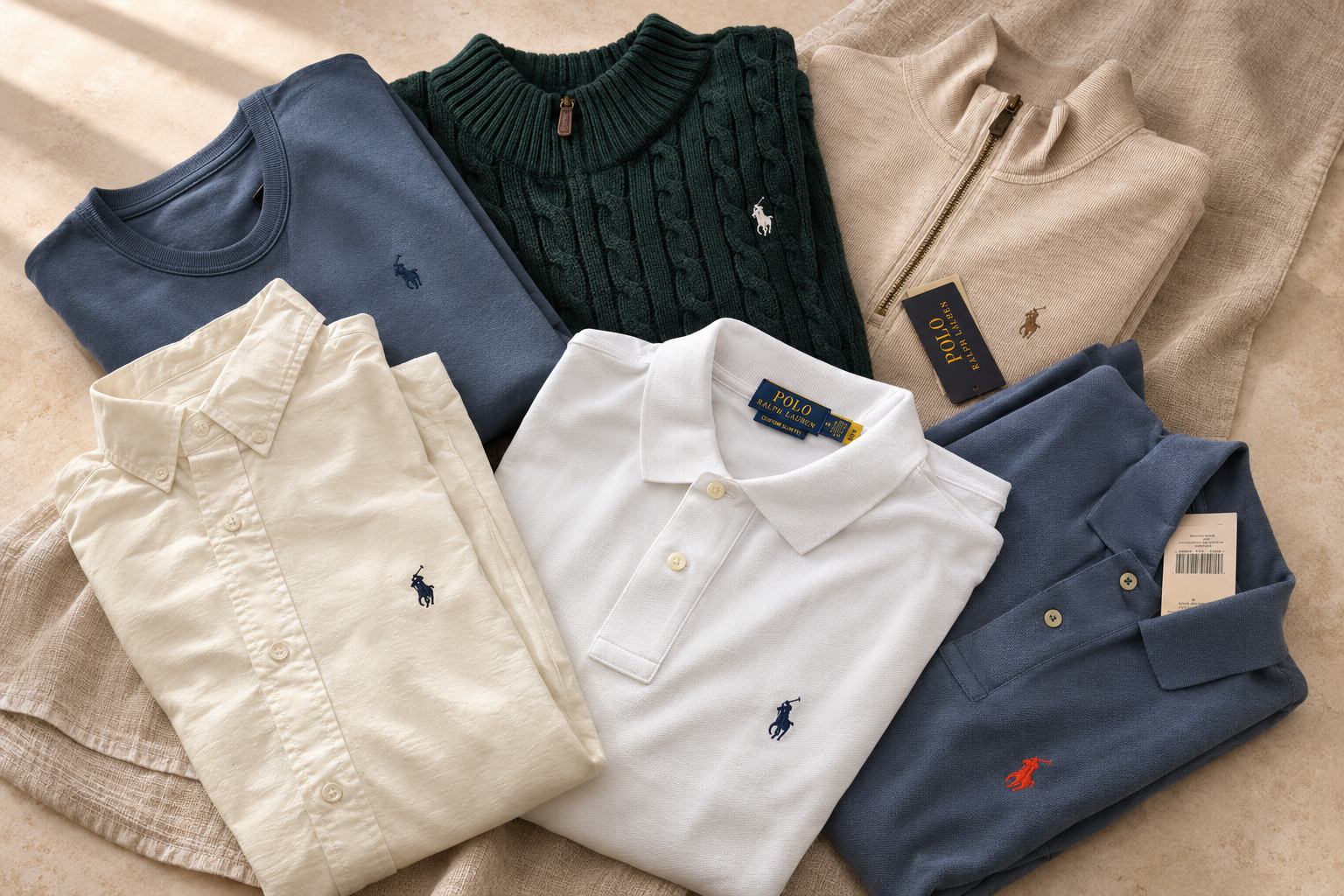
To make styling easier, start with one dominant color and use a lighter piece to brighten the look. For example, if the deep green sweater is the focus, the off-white shirt can reduce the heaviness of the dark tone; if the blue-gray polo is the focus, white or beige pieces keep the look fresh. The red equestrian motif appears only on the blue-gray top, so it works best as a small visual accent—avoid adding too many other high-saturation colors.
Styling Combinations Worth Trying
Blue-Gray and White
Pairing the blue-gray polo with the white polo creates a low-contrast but clear color shift. Blue-gray is more subdued, while white is brighter, making them a solid foundation for your wardrobe. To add more depth, layer the white piece underneath or let it peek out at the collar, cuffs, or hem for a light-colored edge.
Deep Green and Off-White
The deep green cable-knit sweater has a prominent texture, so it pairs well with the off-white shirt in the image. Off-white is softer than pure white and balances the visual weight of the knit. When worn, let a small edge of the shirt collar show while keeping the sweater as the main focal point.
Beige Half-Zip and Blue-Gray Pieces
The beige half-zip top features a metal zipper and leather pull, making it stand out more than basic styles. When paired with blue-gray tops, the overall look stays in a low-saturation palette; with white pieces, it feels lighter. Avoid adding too many heavily branded or decorated items at once, as they can distract from the half-zip's distinctive structure.
Styling Methods from the Flat-Lay
The garments are arranged in an overlapping stack, with clear separation between different colors and textures. To recreate a similar display, follow these steps:
- Start with a larger light or neutral piece as the base.
- Layer knits, shirts, and polos with alternating light and dark tones, avoiding clustering similar colors together.
- Position collars, buttons, zippers, leather pulls, and embroidery toward the center or the brightest area.
- Allow some natural overlap, but keep key textures and logos visible.
- Use a deep green or blue-gray piece to anchor the composition, and balance the edges with white or off-white pieces.
The key is not to fully unfold each garment but to showcase the relationships between pieces through partially visible collars, textures, and details. The cable-knit texture of the sweater, the metal hardware of the half-zip, and the buttons and fabric surface of the polos should all remain in view.
Detailed Styling Tips
The deep green sweater in the image has a pronounced cable-knit pattern, so it works best with shirts or polos that have simpler textures. The white polo has a clear collar and buttons, making it suitable as a clean inner layer or worn on its own. The off-white shirt has a softer tone and is great for layering under darker knits.
The equestrian motif on the blue-gray piece adds a small decorative element, while the zipper and leather pull on the beige half-zip provide material contrast. If you use these elements in one outfit, distribute them strategically—let one serve as the main focal point and keep the rest understated.
What to Check Before Buying
This image is useful for assessing colors, surface textures, collar styles, buttons, and zippers, but the garments are folded and stacked, so you can't judge fit, sizing, fabric composition, comfort, post-wash performance, or durability. For further evaluation, look at fully unfolded photos showing the front, shoulders, sleeve length, hem, and size information, and refer to the product specifications for actual measurements.
Brand logos, neck labels, and hang tags in the image can only be described by their visible appearance; authenticity or specific model numbers cannot be confirmed from the photo alone.
Community feedback (0)