Streetwear Flat Lay: Color Pairing, Layering & Display Tips
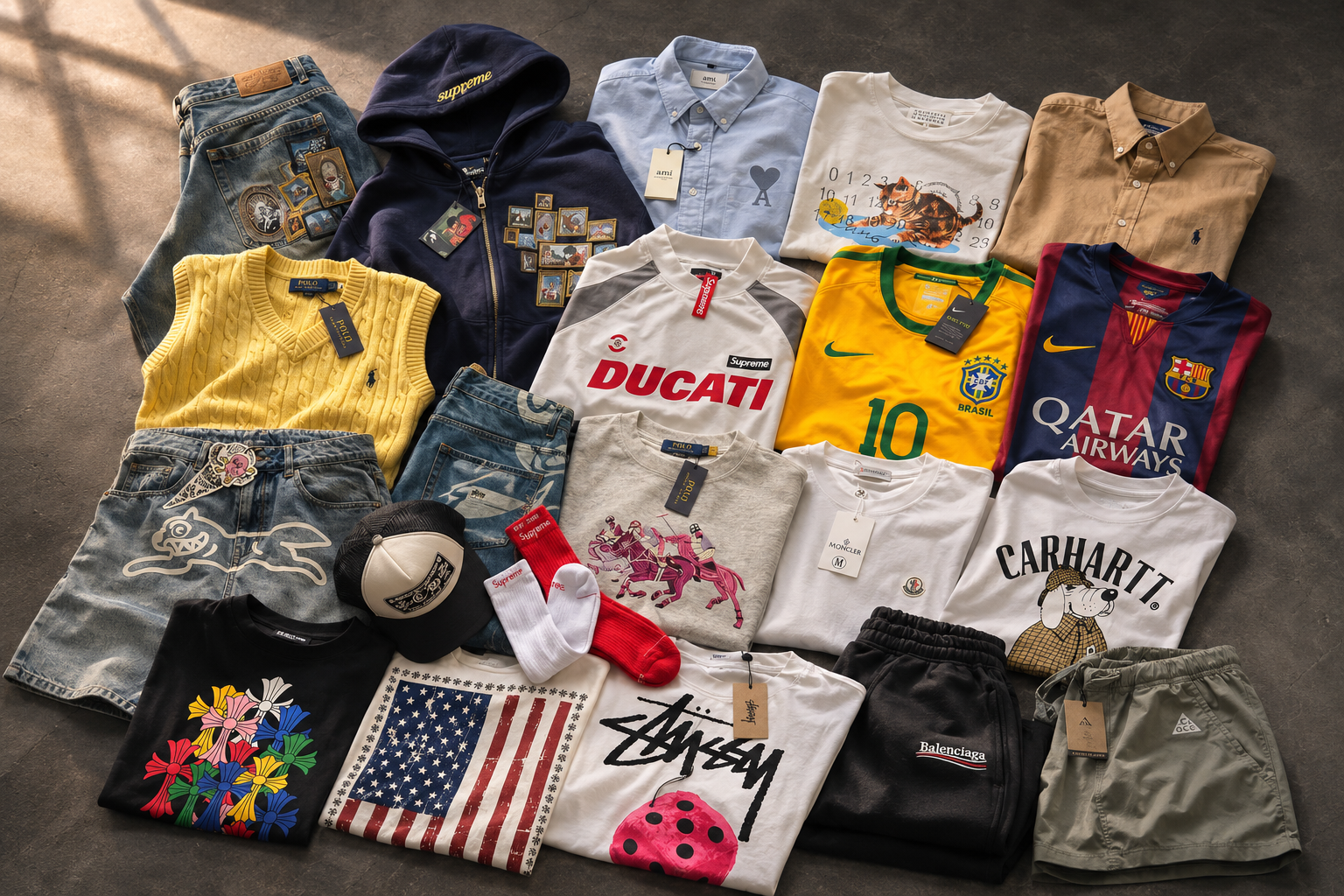
## Pulling Out the Core Color Scheme from the Image This flat lay uses deep navy, denim blue, white, beige, and black as base colors, with yellow, red, green, and pink patterns as accents. The deep navy hooded jacket, black graphic tee, and black track pants form a stable dark zone; the light blue shirt, white tops, and beige pieces keep the overall look from feeling too heavy. The yellow knit vest, yellow soccer jersey, and red-blue colorblock jersey become the most eye-catching focal points. !
- Published
- Editors
- Nathaniel Brooks · Editor-in-Chief and Founder
- Record updated
- Editor score
- 4.2 / 5
Pulling Out the Core Color Scheme from the Image
This flat lay uses deep navy, denim blue, white, beige, and black as base colors, with yellow, red, green, and pink patterns as accents. The deep navy hooded jacket, black graphic tee, and black track pants form a stable dark zone; the light blue shirt, white tops, and beige pieces keep the overall look from feeling too heavy. The yellow knit vest, yellow soccer jersey, and red-blue colorblock jersey become the most eye-catching focal points.

If you want to put together everyday outfits from this, start by picking one hero piece, then use two to three base colors to ground the look. For example, the yellow knit vest works well with a white top and jeans; bright jerseys can be paired with black pants or dark denim; graphic tees go well with solid shorts, track pants, or jackets to avoid multiple large-scale prints competing for attention.
How to Combine Prints and Layers
There are quite a few print types in the image: colorful florals, American flags, animal motifs, racing graphics, team logos, and large letter prints. When styling, you can layer by print size: large-scale prints as the centerpiece, small embroidery, patches, or logos as accents, and solid pieces to provide breathing room.
- Large-print tops paired with solid bottoms keep the outfit looking clean.
- Jeans with patches or decorative details can be paired with simple tops to let the pants be the focal point.
- Soccer jerseys combined with athletic shorts, baseball caps, or socks reinforce a sporty street vibe.
- When layering a knit vest over a shirt or tee, keep the inner layer relatively simple to highlight the vest's texture and color.
- Pieces with prominent branding shouldn't be stacked too much in one outfit; use black, white, khaki, or denim to balance the visual weight.
Practical Tips for Flat Lay Styling
The image uses a scattered layout, with long sleeves, tops, pants, and accessories overlapping to create rich layers. To recreate a similar arrangement, start with the largest items—pants or jackets—then add tops, and finally fill in small pieces like hats and socks. Don't scatter different colors evenly; instead, group similar colors into zones, then use one or two bright pieces to break up continuous color blocks.
When styling, keep details like collars, cuffs, pockets, hang tags, embroidery, and patches visible, so the clothes have both an overall color relationship and observable focal points. Hats and socks work well in visual gaps, filling the composition without covering key prints.
This image is useful for assessing color relationships, print density, layering, and display order. Based on the flat lay alone, you cannot confirm fabric composition, actual hand feel, comfort, fit, post-wash performance, durability, price, inventory, or authenticity; these factors should not be inferred directly from the flat lay effect.
Community feedback (0)